
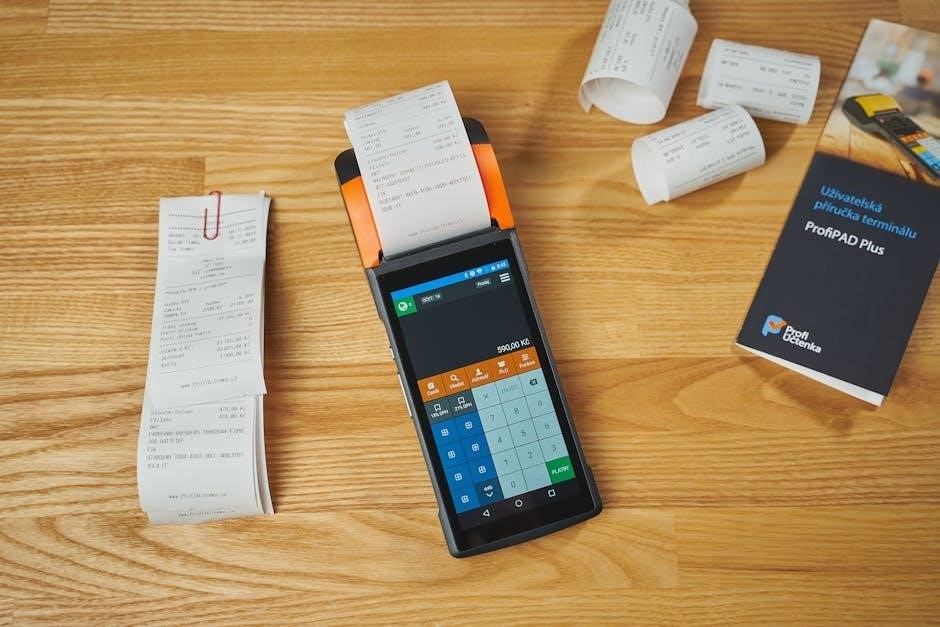
Eyoyo Barcode Scanner User Manual: A Comprehensive Guide
Welcome! This comprehensive manual unlocks the full potential of your Eyoyo barcode scanner, ensuring seamless operation and maximizing productivity from the very start.
Eyoyo stands at the forefront of automatic identification technology, specializing in high-performance barcode scanners designed for diverse applications. From retail and warehousing to logistics and healthcare, our scanners streamline operations and enhance data accuracy. This manual serves as your guide to understanding and utilizing the capabilities of your new Eyoyo 2D or 1D barcode scanner.
We are dedicated to providing innovative solutions that empower businesses to optimize efficiency. Eyoyo scanners are engineered for reliability, speed, and ease of use, offering a seamless integration into existing workflows. This manual will walk you through setup, operation, troubleshooting, and maintenance, ensuring a long-lasting and productive experience. Prepare to enter a new world of possibilities with Eyoyo!
Package Contents & Initial Inspection
Upon receiving your Eyoyo barcode scanner, carefully inspect the package for any signs of damage during transit. The standard package should include the following items: one Eyoyo barcode scanner unit, a USB cable (Type-A to the scanner’s connector), and this user manual. Depending on the model, a charging cable or additional accessories may be present.
If any items are missing or appear damaged, immediately contact our customer support team. Before first use, visually inspect the scanner itself for any physical defects. Ensure all ports are intact and the cable connections are secure. Retain the original packaging for potential returns or warranty claims. Proper initial inspection safeguards your investment and ensures a smooth start.
Scanner Overview: Key Components
Your Eyoyo barcode scanner is engineered for durability and efficiency. The core components include a high-performance imaging sensor, responsible for accurately capturing barcode data. A robust housing protects internal electronics, ensuring longevity. The scan window, typically a clear lens, is where you aim the barcode. A prominent trigger button initiates the scanning process, while indicator lights provide operational status feedback.

Essential interface ports – USB and potentially Bluetooth – facilitate connectivity to various devices. Ergonomic design elements contribute to comfortable, prolonged use. Understanding these key components is crucial for optimal scanner operation and maintenance. Familiarize yourself with their locations and functions for a seamless scanning experience.
Button Functions & Indicators
The primary trigger button on your Eyoyo scanner initiates the decoding process; a single press activates the laser or imaging sensor. Holding the button often enables continuous scanning mode. Indicator lights provide vital feedback. A solid green light typically signifies successful scans, while a flashing green light may indicate data transmission.
A red light often signals a scanning error or inability to decode the barcode. Some models feature a beep or vibration alongside visual cues. The power indicator shows the scanner’s operational status. Consult your specific model’s documentation for detailed interpretations of light patterns and beeps. Understanding these signals ensures efficient troubleshooting and optimal performance.

Interface Ports (USB, Bluetooth)
Your Eyoyo scanner offers versatile connectivity options via USB and Bluetooth. The USB port facilitates a wired connection to computers or POS systems, enabling rapid data transfer and charging. Bluetooth provides wireless freedom, pairing seamlessly with compatible devices like smartphones, tablets, and laptops.
Ensure proper cable connection for USB functionality, and follow pairing instructions for Bluetooth. Some scanners support both connections simultaneously, allowing for flexible usage. The USB port also serves as a charging point when the scanner’s battery is low. Refer to the ‘Setting Up Your Eyoyo Scanner’ section for detailed connection and pairing guides. Proper interface utilization maximizes scanner efficiency;
Setting Up Your Eyoyo Scanner
Initial Setup is Key! Getting your Eyoyo scanner operational is straightforward. Begin by unpacking all components and inspecting for any damage. Next, choose your connection method: USB or Bluetooth. For USB, simply plug the scanner into an available port on your computer; driver installation may be required depending on your operating system (see section below).
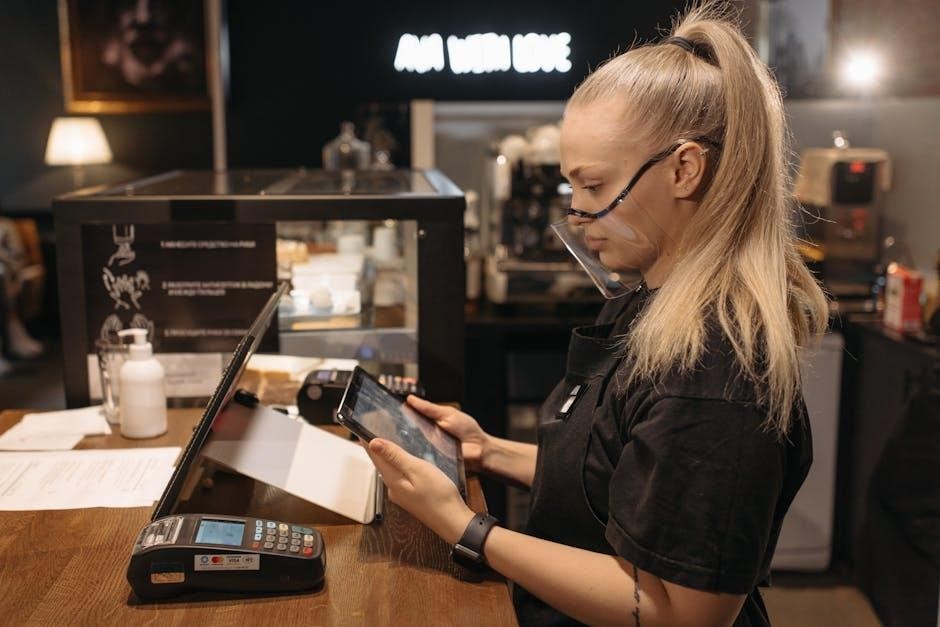
For Bluetooth pairing, activate Bluetooth on your device and follow the scanner’s specific pairing instructions, often involving pressing a button on the scanner to enter pairing mode. Ensure the scanner is adequately charged before initial use. Detailed instructions for Windows, macOS, Linux, iOS, and Android are provided in the following subsections.
USB Connection & Driver Installation (Windows, macOS, Linux)
Seamless USB Integration! Connecting via USB is often plug-and-play. Windows may automatically detect and install the necessary drivers. If not, visit the Eyoyo website and download the appropriate driver for your scanner model and Windows version. macOS and Linux generally recognize the scanner as a standard HID device, requiring no additional driver installation.
However, for advanced functionality or specific applications, downloading and installing the Eyoyo driver package is recommended. Follow the on-screen prompts during installation. After installation, restart your computer if prompted. Verify successful connection within your device manager or system information settings. Ensure the USB cable is securely connected for stable operation.

Bluetooth Pairing Instructions (iOS, Android)
Wireless Freedom! To pair your Eyoyo scanner via Bluetooth, first, ensure the scanner is in pairing mode – typically activated by holding a specific button (refer to the ‘Scanner Overview’ section). On your iOS or Android device, navigate to the Bluetooth settings menu. Your Eyoyo scanner should appear in the list of available devices.

Select the scanner to initiate the pairing process. You may be prompted to enter a pairing code; the default is often ‘0000’ or ‘1234’. Once paired, the scanner will connect automatically when in range. For Android, you might need to grant the scanner permission to access Bluetooth. Ensure Bluetooth is enabled on both devices for a stable connection.
Understanding Scanning Modes
Versatile Operation! Your Eyoyo scanner offers multiple scanning modes to suit diverse workflows. Continuous Scan Mode allows the scanner to constantly attempt to read barcodes as long as the trigger is pressed, ideal for high-volume scanning. Trigger Scan Mode requires a press of the trigger for each scan, providing greater control and preventing accidental reads.
Auto-Scan Mode automatically reads barcodes when they are presented within the scanner’s field of view – perfect for hands-free operation. Configuration of Auto-Scan Mode, including sensitivity and delay settings, can often be adjusted using barcode setup codes (detailed in a separate section). Selecting the appropriate mode optimizes efficiency and accuracy for your specific application.
Continuous Scan Mode
High-Volume Scanning! In Continuous Scan Mode, simply depress and hold the scanner trigger. The Eyoyo scanner will continuously attempt to decode any barcode presented within its reading range. This mode is exceptionally efficient for processing large quantities of items, such as in warehouse receiving or retail checkout scenarios.
Release the trigger to halt scanning. Be mindful that unintentional scans can occur if barcodes are constantly within the field of view while the trigger is held. This mode minimizes manual effort but requires careful barcode presentation. Adjust ambient lighting to optimize performance and reduce errors. For optimal results, ensure barcodes are clean and undamaged.
Trigger Scan Mode
Precise Control! Trigger Scan Mode offers maximum control over the scanning process. Press and release the trigger for each individual scan. This method is ideal when scanning items intermittently or when precise targeting is required, preventing accidental reads. It’s particularly useful in environments where multiple barcodes are in close proximity.
The scanner activates only when the trigger is depressed, conserving power and ensuring focused scanning. This mode provides a tactile confirmation of each scan, enhancing user feedback. Ensure a firm, deliberate press and release of the trigger for reliable barcode capture. This is the default scanning mode for many Eyoyo models, offering a balance of efficiency and accuracy.
Auto-Scan Mode (and Configuration)

Hands-Free Efficiency! Auto-Scan Mode allows the scanner to automatically detect and decode barcodes as they pass within its field of view, eliminating the need to press the trigger. This is perfect for high-volume scanning applications on conveyor belts or at checkout counters. Configuration is key; access the scanner’s settings via a barcode setup guide (often included) or dedicated software.
Adjust parameters like scan speed, scan duration, and sensitivity to optimize performance for your specific environment. Some models offer adjustable beep volumes and visual indicators. Incorrect configuration can lead to misreads or missed scans, so careful calibration is crucial. Remember to save your settings after making adjustments for persistent operation.
Decoding Capabilities: Supported Barcode Types
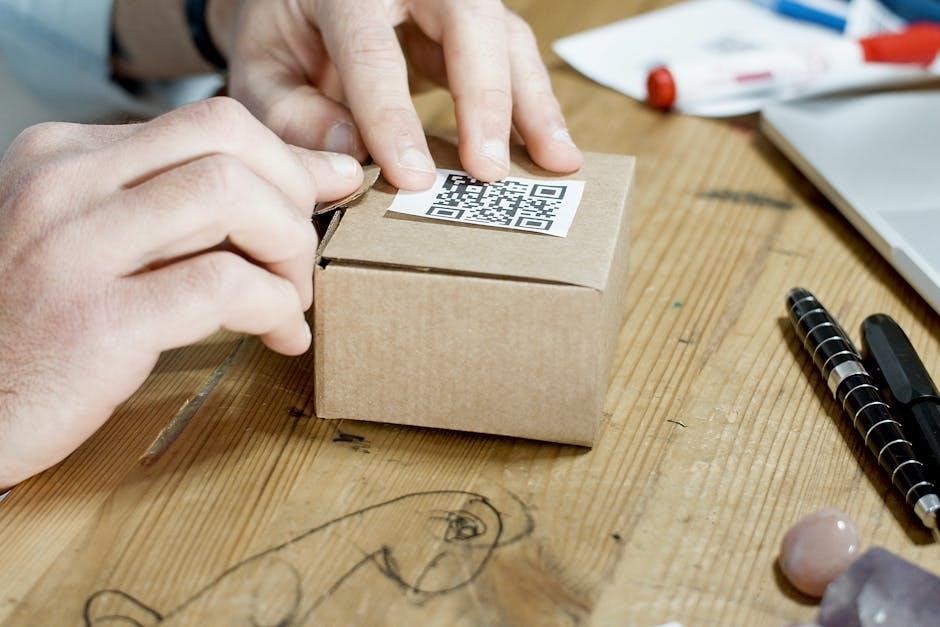
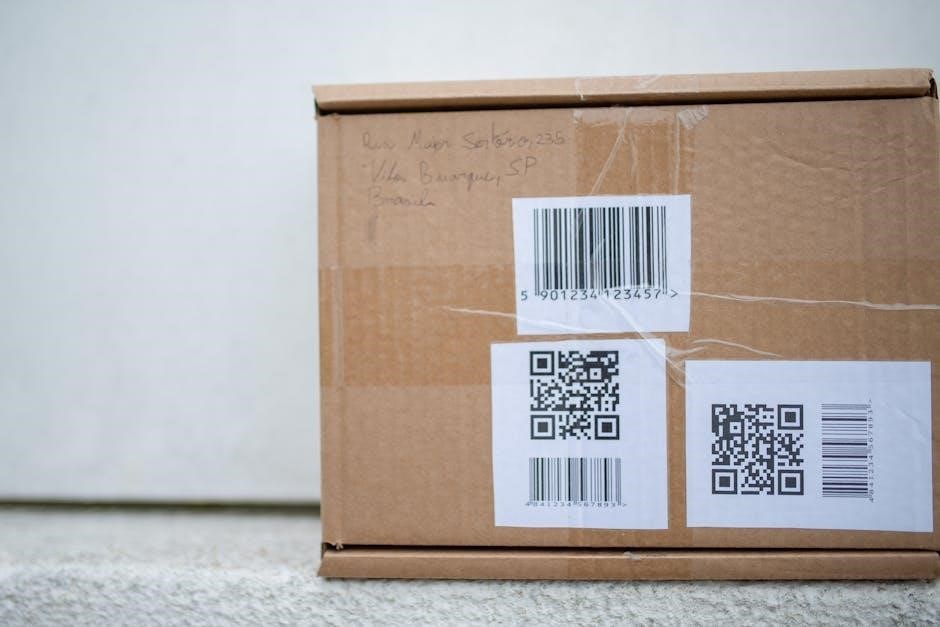
Versatile Reading! Eyoyo scanners are engineered for broad compatibility, adeptly decoding a wide array of barcode symbologies. This ensures seamless integration across diverse industries and applications. Your scanner supports prevalent 1D barcodes like UPC-A, EAN-13, Code 39, Code 128, and Interleaved 2 of 5 – commonly found on retail products and shipping labels.

Furthermore, it excels at reading 2D barcodes including QR Codes, Data Matrix, and PDF417, increasingly used for mobile ticketing, inventory management, and direct marketing. Specific model capabilities may vary, so consult the product specifications for a complete list. Efficient decoding relies on barcode quality and print clarity; damaged or poorly printed barcodes may pose challenges.
1D Barcode Support (UPC, EAN, Code 39, etc.)
Linear Barcode Expertise! Eyoyo scanners demonstrate robust performance with standard one-dimensional (1D) barcodes. This includes universally recognized formats like UPC-A and EAN-13, vital for retail point-of-sale systems. The scanner reliably decodes Code 39, frequently used in logistics and warehousing, and Code 128, offering high-density data encoding.
Additional supported 1D symbologies encompass Interleaved 2 of 5, often found on shipping containers, and Code 93, utilized in library automation. Optimal scanning distance and angle are crucial for accurate 1D barcode reading. Ensure barcodes are clean, undamaged, and presented with sufficient contrast for consistent results. Proper lighting conditions also contribute to successful decoding;
2D Barcode Support (QR Code, Data Matrix, PDF417, etc.)
Advanced Data Capture! Eyoyo scanners excel at reading two-dimensional (2D) barcodes, offering significantly higher data density than 1D codes. This includes the ubiquitous QR Code, widely used for marketing and information sharing, and the compact Data Matrix, common in industrial applications and product labeling.
Furthermore, the scanner supports PDF417, capable of storing large amounts of data, ideal for documents and ticketing. Decoding 2D barcodes may require a closer scanning distance and a stable scan. Ensure the barcode image is clear and not distorted. The scanner’s advanced imaging technology allows for quick and accurate 2D barcode recognition, enhancing operational efficiency and data accuracy.
Troubleshooting Common Issues
Facing Challenges? This section addresses frequent problems encountered with your Eyoyo scanner. If the scanner isn’t recognizing barcodes, verify the barcode type is supported, the scanner is properly configured for the current scanning mode, and the barcode quality is sufficient – ensure it’s not damaged or poorly printed.
Connection problems (USB or Bluetooth) often stem from loose cables, incorrect driver installations, or Bluetooth pairing issues. Restarting your device and re-pairing via Bluetooth can resolve many connectivity concerns. If the scanner freezes or malfunctions, try a reset by disconnecting and reconnecting the power source. For persistent issues, consult the warranty information for support options.
Scanner Not Recognizing Barcodes
Is your Eyoyo scanner failing to read barcodes? Several factors could be at play. First, confirm barcode compatibility – ensure the scanner supports the specific barcode symbology you’re attempting to read (1D or 2D). Next, check barcode quality; damaged, poorly printed, or obscured barcodes are often unreadable. Adjust the scanning distance and angle; barcodes need to be within the scanner’s optimal range.
Also, verify the scanner’s configuration. Ensure it’s set to the correct scanning mode (continuous, trigger, or auto-scan) and that the appropriate barcode types are enabled in the scanner settings. Finally, clean the scanner window with a soft, lint-free cloth to remove any dirt or obstructions that might interfere with the reading process.
Connection Problems (USB & Bluetooth)
Experiencing connectivity issues with your Eyoyo scanner? For USB connections, verify the cable is securely plugged into both the scanner and your computer. Try a different USB port, and ensure your operating system recognizes the device – check Device Manager (Windows) or System Information (macOS). If using Bluetooth, confirm the scanner is in pairing mode and discoverable by your device.
Ensure Bluetooth is enabled on your host device (phone, tablet, or computer). Remove any previous pairings of the scanner and attempt to pair again. Interference from other wireless devices can sometimes cause issues; try moving away from potential sources. Finally, check the scanner’s battery level, as low power can disrupt Bluetooth connectivity.
Scanner Freezing or Malfunctioning
Is your Eyoyo scanner unresponsive or behaving erratically? A common fix is a simple reset. Locate the reset button (refer to the ‘Scanner Overview’ section) and use a paperclip to gently press and hold it for 5-10 seconds. This often resolves temporary software glitches. If the issue persists, disconnect the scanner from its power source (USB or remove battery).
Check for firmware updates on the Eyoyo website, as outdated firmware can cause instability. Ensure the scanning environment is within the scanner’s operating temperature range. Avoid excessive dust or moisture. If the scanner continues to malfunction after these steps, contact Eyoyo support for further assistance and potential repair options – see ‘Warranty Information & Support’.
Cleaning and Maintenance
Regular cleaning ensures optimal performance and extends the lifespan of your Eyoyo scanner. Always disconnect the scanner from any power source before cleaning. Use a soft, dry, lint-free cloth to gently wipe the exterior housing. For stubborn dirt, slightly dampen the cloth with isopropyl alcohol – avoid getting liquid inside the scanner.
The scan window requires particular attention. Clean it regularly with a specialized lens cleaning solution or a slightly dampened cloth. Avoid abrasive cleaners or harsh chemicals. Inspect the cable for damage; replace if frayed. Store the scanner in a clean, dry environment when not in use. Proper maintenance prevents malfunctions and ensures reliable scanning for years to come.
Warranty Information & Support
Eyoyo offers a [Specify Warranty Period ─ e.g., 12-month] warranty against defects in materials and workmanship from the date of purchase. This warranty covers repair or replacement of the scanner, at Eyoyo’s discretion. Damage caused by misuse, accidents, or unauthorized modifications is not covered.
To initiate a warranty claim, please contact Eyoyo customer support with your proof of purchase and a detailed description of the issue. For technical assistance, troubleshooting guides, and frequently asked questions, visit our website at [Insert Website Address]. Our dedicated support team is available via email at [Insert Email Address] or by phone at [Insert Phone Number]; We are committed to providing excellent customer service and ensuring your satisfaction.