

Botany in a Day: An Overview
Botany in a Day, by Thomas J. Elpel, offers a unique approach to plant identification, focusing on patterns rather than memorizing individual species.
This PDF resource, available in various editions (including 6.1), simplifies botanical knowledge, covering over 100 plant families and 700 genera.
The book’s cataloging data highlights its practical application for North American botany, with ISBNs 978-1-892784-35-3 and 9781892784070.
Thomas J. Elpel is a self-taught botanist and author renowned for his accessible approach to plant identification. His seminal work, Botany in a Day: The Patterns Method of Plant Identification, challenges traditional memorization-based learning, instead advocating for understanding underlying botanical patterns.
Elpel’s methodology, detailed within the PDF version of the book, emphasizes recognizing plant families – groups of related plants sharing common characteristics. This allows for rapid identification of thousands of species with a relatively small initial investment in learning. The book, available through platforms like PDFCOFFEE.COM, has seen multiple editions, including the 6th edition, continually refining and expanding upon its core principles.
His work isn’t simply about naming plants; it’s about fostering a deeper connection with the natural world and understanding plant relationships. Elpel’s approach empowers individuals to confidently navigate the plant kingdom, moving beyond rote learning to genuine comprehension. The book’s enduring popularity stems from its practicality and effectiveness.
The Patterns Method of Plant Identification
The Patterns Method, central to Botany in a Day and readily accessible in its PDF format, revolutionizes plant identification. Instead of memorizing countless species, this technique focuses on recognizing key characteristics shared within plant families.
Elpel’s method prioritizes understanding floral structures, leaf arrangements, and growth habits – the patterns – that define these families. This allows for the identification of unfamiliar plants by simply observing these features and matching them to known family traits. The book details how mastering just eight common plant families unlocks the ability to recognize over 45,000 species.
This approach, detailed in resources like those found on backlot.aths.org, is far more efficient and intuitive than traditional methods. The PDF version provides a “Quick Guide to Flower Terms” to aid in pattern recognition, making botany accessible to all.
Core Concepts of the Book
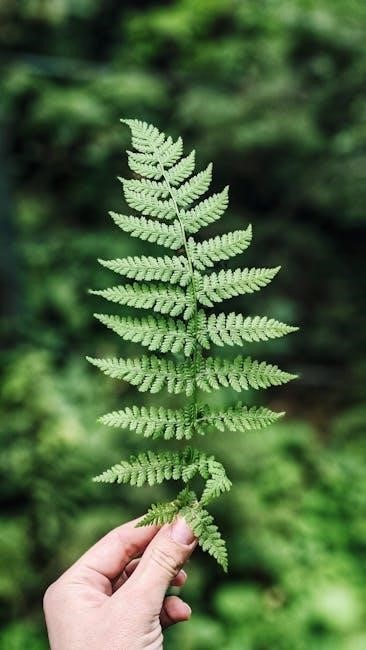
Botany in a Day’s PDF emphasizes plant families as identification keys, shifting focus from individual species to broader patterns for efficient learning.
The book’s value lies in understanding these patterns, applicable across numerous editions and readily available online.
Plant Families as a Key to Identification
Botany in a Day’s core methodology revolves around mastering plant families, a significantly more efficient approach than memorizing countless species individually. The PDF version of the book expertly guides readers through this process, highlighting that understanding a family’s characteristics allows for the identification of thousands of plants.
Instead of focusing on minute details unique to each species, Elpel’s work emphasizes recognizing shared traits within families like Asteraceae (Sunflower), Fabaceae (Legume), and Rosaceae (Rose). This approach, detailed within the downloadable PDF, allows for rapid identification even with unfamiliar plants. The book covers over 100 plant families, providing a robust framework for botanical understanding.
By learning the “patterns” within these families, as the book title suggests, users gain the ability to confidently categorize and recognize a vast array of flora, making the Botany in a Day PDF a powerful tool for both beginners and experienced plant enthusiasts.
Focus on Patterns, Not Just Species
The central tenet of Botany in a Day, readily accessible in its PDF format, is a shift in perspective: prioritize recognizing patterns over rote memorization of individual plant species. Thomas J. Elpel argues that most plant identification guides overwhelm users with specific details, hindering broader understanding.
The PDF emphasizes that plants within the same family share fundamental characteristics – leaf shape, flower structure, growth habit – creating predictable patterns. Mastering these patterns, as outlined in the book, unlocks the ability to identify thousands of plants with relative ease. This approach, detailed in the 6.1 edition, moves “beyond the details towards a greater understanding.”
The downloadable Botany in a Day PDF empowers users to quickly categorize unfamiliar plants by recognizing these family-specific traits, fostering a more intuitive and lasting connection with the botanical world, rather than relying on exhaustive species lists.
The Significance of the 6th (and Earlier) Editions
The evolution of Botany in a Day, available as a PDF, reflects a commitment to refining and expanding its core principles. While earlier editions, like the 4th, laid the groundwork, the 6th (and 6.1) edition represents a significant update to Elpel’s “Patterns Method” of plant identification.
The PDF versions, including those cataloged with ISBN 978-1-892784-35-3, demonstrate a consistent effort to improve clarity and accessibility. Each iteration builds upon previous knowledge, incorporating feedback and new botanical insights. The book’s enduring popularity, evidenced by continued PDF downloads, speaks to its effectiveness.
Accessing the Botany in a Day PDF allows users to benefit from years of refinement, offering a comprehensive and practical guide to understanding plant families and their identifying characteristics, making it a valuable resource for both beginners and experienced botanists.
Key Plant Families Covered
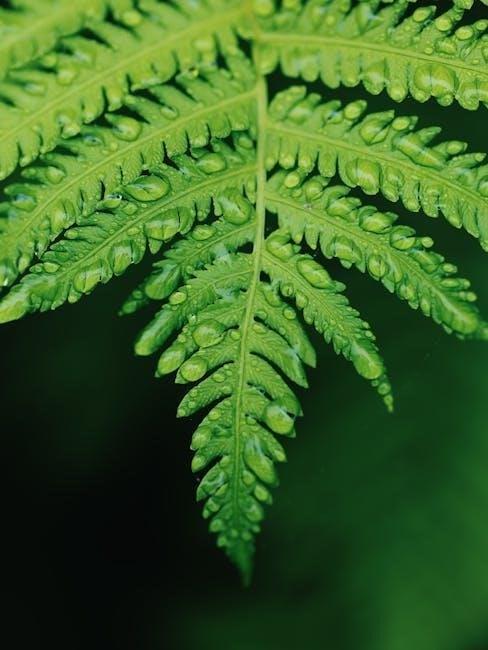
Botany in a Day PDF expertly details Asteraceae, Fabaceae, Lamiaceae, Poaceae, and Rosaceae—eight common families encompassing over 45,000 plant species.
Elpel’s guide simplifies identification through pattern recognition within these crucial botanical groups.
Asteraceae (Sunflower Family)
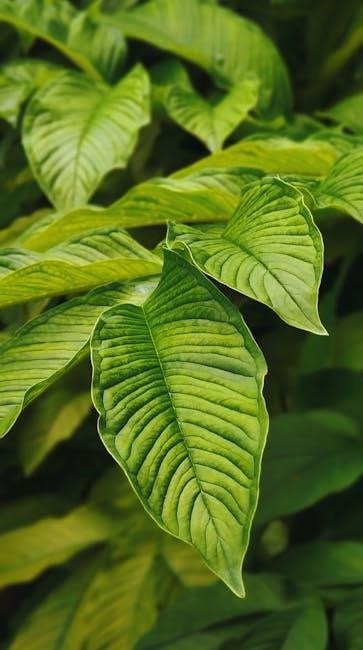
Botany in a Day’s PDF coverage of Asteraceae, the Sunflower Family, is particularly insightful, given its vast representation in the plant kingdom. This family is characterized by its composite flower heads, appearing as single blooms but actually clusters of many tiny flowers.
Elpel emphasizes recognizing key features like ray and disc florets, phyllaries (leaf-like structures surrounding the flower head), and alternate leaf arrangements. The book details how these patterns, rather than specific species details, enable rapid identification across a huge range of plants – think sunflowers, daisies, dandelions, and lettuce!
Understanding Asteraceae’s structure, as presented in the Botany in a Day PDF, unlocks the ability to confidently categorize a significant portion of the plants encountered in North America and beyond, streamlining the identification process considerably.
Fabaceae (Legume Family)
Botany in a Day’s PDF dedicates significant attention to Fabaceae, the Legume Family, a group crucial for both ecological and human purposes. This family is easily recognizable by its characteristic pea-like flowers and, most notably, its fruit – the legume, or pod.
Elpel’s approach, detailed within the PDF, focuses on identifying key features like compound leaves (often with three leaflets), stipules (small appendages at the base of the leaf stalk), and the distinctive flower shape. Recognizing these patterns allows for quick identification of beans, peas, clover, and alfalfa.
The book highlights Fabaceae’s importance due to its nitrogen-fixing capabilities, enriching soil health. Mastering this family, as outlined in the Botany in a Day PDF, provides a foundational understanding of plant ecology and agricultural significance.
Lamiaceae (Mint Family)
Botany in a Day’s PDF thoroughly explores Lamiaceae, the Mint Family, renowned for its aromatic qualities and diverse uses. Elpel emphasizes identifying this family through its square stems, opposite leaves, and distinctive flower structures – often appearing in whorls or spikes.
The PDF details how mint family members typically have bilabiate (two-lipped) flowers, a key characteristic for identification. Common examples like mint, lavender, rosemary, and sage are covered, showcasing the family’s widespread presence in gardens and wild landscapes.
Understanding the patterns within Lamiaceae, as presented in the Botany in a Day PDF, unlocks the ability to recognize a vast array of plants, many with medicinal or culinary applications. This family’s consistent features make it a rewarding subject for pattern-based learning.

Poaceae (Grass Family)
Botany in a Day’s PDF dedicates significant attention to Poaceae, the Grass Family, one of the most economically and ecologically important plant groups globally. Elpel’s approach, detailed within the PDF, focuses on recognizing grasses by their distinctive features: hollow stems, sheathing leaves, and inconspicuous flowers.
The PDF explains that grass flowers are typically wind-pollinated and arranged in complex structures called spikelets. Identifying these spikelets, along with the presence of a ligule (a membrane or fringe of hairs at the junction of leaf and stem), is crucial for family recognition.
The resource highlights the sheer diversity within Poaceae, encompassing familiar species like wheat, rice, corn, and lawn grasses. Mastering the patterns of this family, as outlined in the Botany in a Day PDF, provides a foundation for understanding a substantial portion of the plant kingdom.
Rosaceae (Rose Family)

Botany in a Day’s PDF extensively covers Rosaceae, the Rose Family, a diverse group including familiar fruits, ornamental flowers, and important timber trees. Elpel’s method, detailed in the PDF, emphasizes recognizing the family through its characteristic five-petaled flowers and numerous stamens.
The PDF explains that Rosaceae fruits are often pomes (like apples and pears) or drupes (like cherries and plums), providing another key identification feature. Leaf structure, often pinnately compound, is also highlighted as a consistent pattern within the family.

The resource showcases the economic importance of Rosaceae, encompassing species like roses, strawberries, raspberries, and almonds. Understanding these patterns, as presented in the Botany in a Day PDF, unlocks the ability to identify a wide range of plants with relative ease, even beyond specific species knowledge.

Practical Applications & Benefits
Botany in a Day’s PDF empowers rapid plant identification, fostering understanding of plant relationships and aiding in recognizing edible and medicinal species effectively.
Rapid Plant Identification Skills
Botany in a Day’s approach, readily accessible as a PDF, dramatically accelerates plant identification capabilities. Instead of painstakingly memorizing countless species, the book teaches users to recognize key patterns within plant families.
This method allows for quick assessments in the field, even with unfamiliar plants. By mastering the characteristics of common families like Asteraceae (Sunflower), Fabaceae (Legume), and Rosaceae (Rose), one can confidently narrow down possibilities.
The PDF format facilitates easy reference during outdoor excursions. The book’s focus on eight common plant families, applicable to over 45,000 species, provides a powerful foundation for building these skills. Users quickly learn to observe floral structures and leaf arrangements, leading to efficient and accurate identifications.
This skill is invaluable for both amateur naturalists and experienced botanists alike.
Understanding Plant Relationships
The Botany in a Day PDF fosters a deeper comprehension of plant relationships beyond simple identification. By categorizing plants into families, the book reveals the evolutionary connections and shared characteristics among diverse species.
This familial approach highlights why certain plants exhibit similar traits, even if they appear vastly different superficially. Understanding these relationships provides insight into plant ecology and distribution.
The text emphasizes that mastering patterns within plant families—like the distinctive structures of the Mint (Lamiaceae) or Grass (Poaceae) families—unlocks a broader understanding of the plant kingdom.
This knowledge isn’t just about naming plants; it’s about recognizing the underlying order and interconnectedness of life, enhancing appreciation for botanical diversity.
Edible and Medicinal Plant Recognition
The Botany in a Day PDF equips readers with the foundational knowledge to confidently identify potential edible and medicinal plants, though caution and further verification are always crucial.
By focusing on plant families—like the Rose (Rosaceae) and Legume (Fabaceae) families, known for edible members—the book provides a framework for assessing plant safety and potential uses.
However, the text doesn’t promote reckless foraging; it emphasizes understanding patterns to narrow down possibilities, followed by cross-referencing with reliable, localized field guides.
Recognizing plant families aids in identifying potential toxins or allergens, promoting responsible and informed foraging practices. The book’s approach isn’t about memorizing a list of edibles, but about developing the skills to evaluate plants safely.

Technical Details & Resources
Botany in a Day’s PDF version (ISBNs 978-1-892784-35-3, 9781892784070, 8601400138540) is downloadable, and includes a flower terminology quick guide.
ISBN and Publication Information (978-1-892784-35-3, 9781892784070, 8601400138540)
Botany in a Day, authored by Thomas J. Elpel, has seen multiple publications, each contributing to its refinement as a practical botanical guide.
The initial editions, including the widely referenced 6th edition, are identified by ISBN 978-1-892784-35-3. A subsequent edition, often cited as the 4th, carries the ISBN 9781892784070.
More recent cataloging data, as found on Amazon, lists ISBN 8601400138540. These identifiers are crucial for locating specific versions of the book.
The PDF format, frequently shared online, often references these ISBNs for accurate identification. Hops Press, LLC, has been a consistent publisher throughout these iterations.
Understanding these publication details aids in sourcing the correct edition for study and application of the Patterns Method.
Availability as a PDF Download
Botany in a Day, in its digital form, is frequently sought as a PDF download due to its portability and accessibility. Several online platforms host versions of Thomas J. Elpel’s work, including PDFCOFFEE.COM, which offers a 271KB file.
However, users should exercise caution when downloading from unofficial sources to ensure file integrity and avoid potential malware.
The availability of the PDF version facilitates convenient study and field reference, allowing users to apply the Patterns Method without carrying a physical book.
While the official Hops Press, LLC website may offer purchase options, the PDF format’s prevalence stems from its ease of sharing and distribution within botanical communities.
Always verify the source and ISBN (978-1-892784-35-3, 9781892784070, 8601400138540) to confirm the edition’s authenticity.
Quick Guide to Flower Terminology
Botany in a Day, even in PDF format, emphasizes understanding floral structures as a cornerstone of plant identification. The book includes a “Quick Guide to Flower Terms,” defining essential botanical vocabulary.
Key terms, frequently appearing in bold throughout the text, are crucial for applying the Patterns Method effectively. This glossary simplifies complex concepts, enabling users to analyze flower characteristics with confidence;
Understanding terms like “calyx,” “corolla,” “stamen,” and “pistil” is vital for recognizing plant family patterns.
The PDF version retains this valuable resource, making it readily accessible during field studies or independent learning.
Elpel’s approach prioritizes practical application, so mastering this terminology unlocks the book’s full potential for rapid and accurate plant identification, even from a digital copy.
Troubleshooting Access & Network Issues
Botany in a Day PDF access problems may require checking cables, rebooting network devices, and verifying proxy settings for connectivity.
Ensure the program is allowed network access.
Resolving Network Connectivity Problems
Accessing the Botany in a Day PDF can sometimes be hindered by network issues. Begin by systematically checking all physical connections – ensure cables are securely plugged into your computer, modem, and router. A simple reboot of these network devices often resolves temporary glitches, clearing cached data and re-establishing a stable connection.
If problems persist, verify your computer’s network settings. Confirm you are connected to the correct Wi-Fi network and that your internet service provider is not experiencing outages. Examine your firewall settings; the PDF reader or download manager might be blocked from accessing the internet. If it’s listed as an allowed program, try removing and re-adding it to the exception list.
Consider your proxy settings, especially if you are on a corporate or school network. Contact your network administrator to confirm the correct proxy configuration. Finally, temporarily disabling your firewall (for testing purposes only!) can help determine if it’s the source of the issue.