

“We Are Not Free”’s PDF version facilitates widespread access to this poignant narrative, exploring themes of identity and resilience.
Digital distribution ensures broader readership,
particularly for educational purposes,
allowing deeper engagement with its historical context and impactful storytelling.
Overview of the Book
“We Are Not Free”, by Traci Chee, is a powerful young adult novel presented in a unique format – fourteen interconnected poems, each narrated by a different Japanese American teenager during World War II. The book meticulously details the experiences of these youths as they navigate the trauma of forced incarceration in internment camps following Executive Order 9066.
The narrative isn’t a linear story, but a chorus of voices, offering diverse perspectives on loss, fear, and the struggle to maintain identity. The PDF format allows readers to easily access and share this vital piece of historical fiction, fostering discussions about civil liberties and the lasting impact of injustice. It’s a compelling exploration of resilience amidst profound adversity.
Author and Context
Traci Chee, a New York Times bestselling author, crafted “We Are Not Free” from a deep desire to illuminate a largely overlooked chapter of American history. Her work often blends fantasy with historical elements, but this novel is grounded in meticulous research regarding the Japanese American internment experience.
Chee’s inspiration stemmed from wanting to give voice to the teenagers who lived through this injustice, recognizing their stories were often absent from mainstream narratives. The PDF version of the book extends her reach, allowing educators and readers worldwide to engage with this crucial history. The context of the book is deeply rooted in the post-Pearl Harbor climate of fear and prejudice, and the subsequent violation of civil rights.
Significance of the PDF Format
The PDF format significantly broadens accessibility to “We Are Not Free,” circumventing the limitations of physical book distribution. This digital format allows for easy sharing amongst students, researchers, and book clubs, fostering wider discussion about the Japanese American internment.
Furthermore, PDFs facilitate features like text searching, highlighting, and annotation, enhancing the reading and study experience. Digital preservation through PDF archiving ensures the book’s longevity, safeguarding this important historical narrative for future generations. The availability of a PDF version also lowers barriers to entry, making the story accessible to those with limited access to bookstores or libraries.

Historical Background & Setting
“We Are Not Free” is rooted in the WWII incarceration of Japanese Americans, a dark chapter spurred by Executive Order 9066 and unfolding within internment camps.
Japanese American Incarceration During WWII
Following the attack on Pearl Harbor, a wave of fear and prejudice led to the forced removal of over 120,000 Japanese Americans from their homes on the West Coast.
This unjust act, fueled by wartime hysteria, saw families uprooted and incarcerated in desolate internment camps scattered across the country.
These camps, often located in harsh desert environments, were characterized by cramped living conditions, inadequate resources, and a profound loss of freedom.
“We Are Not Free” powerfully depicts this historical trauma, illustrating the devastating impact on individuals and communities. The PDF format allows for accessible study of this period, fostering understanding of the systemic racism and civil liberties violations that defined this dark chapter in American history.
Executive Order 9066
Signed by President Franklin D. Roosevelt in February 1942, Executive Order 9066 authorized the Secretary of War to designate military areas from which any or all persons could be excluded. This sweeping decree, cloaked in national security concerns, directly led to the mass incarceration of Japanese Americans.
It effectively stripped them of their constitutional rights, based solely on their ancestry.
The “We Are Not Free” PDF serves as a crucial reminder of the consequences of unchecked executive power and racial prejudice. Studying the historical context of EO 9066 through this accessible format highlights the fragility of civil liberties and the importance of vigilance against discrimination, fostering critical thinking about justice and freedom.
Life in the Internment Camps
Life within the ten internment camps was characterized by harsh conditions, overcrowding, and a profound loss of dignity. Families lived in hastily constructed barracks, facing inadequate sanitation, food, and medical care. Despite these hardships, internees attempted to build communities, establishing schools, churches, and recreational activities.
The “We Are Not Free” PDF powerfully depicts these realities through the eyes of its teenage characters. Accessing this narrative in PDF format allows readers to intimately understand the daily struggles and resilience of those unjustly imprisoned. It underscores the importance of remembering this dark chapter in American history and learning from its lessons about prejudice and injustice.

Characters and Narratives
“We Are Not Free” features a diverse cast of Japanese American teenagers whose interwoven stories reveal the complexities of life within the internment camps, accessible via PDF.
Diverse Perspectives within the Camps
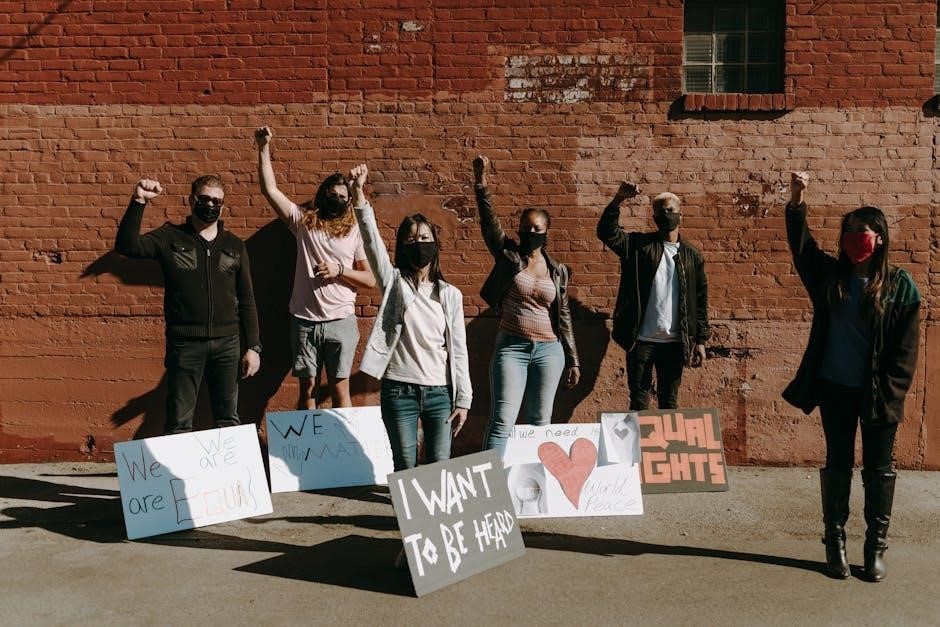
“We Are Not Free,” readily available as a PDF, masterfully presents the incarceration experience through multiple first-person narratives. This approach avoids a monolithic portrayal, instead showcasing the varied reactions and coping mechanisms of those unjustly detained.
Characters grapple with differing levels of resistance, acceptance, and hope. Some actively challenge the system, while others prioritize maintaining family unity or finding small joys amidst hardship. The PDF format allows readers to intimately connect with each individual’s internal struggles, highlighting the emotional toll of lost freedom and the fight to preserve identity.
These diverse viewpoints underscore the fact that there was no single “Japanese American” experience during WWII, but rather a spectrum of responses shaped by personal beliefs, age, and circumstance.
The Role of Teenagers in the Story
The “We Are Not Free” PDF powerfully centers the experiences of Japanese American teenagers during WWII incarceration. This narrative choice is crucial, as adolescence is a period of intense identity formation, making the loss of freedom particularly devastating.
These young characters navigate the complexities of loyalty, patriotism, and prejudice while simultaneously dealing with typical teenage concerns like love, friendship, and future aspirations. The PDF allows for close reading of their evolving perspectives as they grapple with injustice and attempt to define themselves within a constrained environment.
Their stories highlight the intergenerational impact of the camps and the resilience of youth in the face of adversity.
Impact of the Camps on Family Dynamics
The “We Are Not Free” PDF vividly portrays the profound disruption caused by internment camps on family structures. Forced relocation and cramped living conditions strained relationships, creating tensions and anxieties. Traditional roles shifted as families struggled to maintain normalcy amidst immense hardship.
The narrative, accessible through the PDF format, demonstrates how the loss of economic independence and privacy impacted parental authority and familial bonds. Intergenerational conflicts arose as younger generations questioned the silence and acceptance of elders.
The story highlights both the fracturing and strengthening of family ties, showcasing the enduring power of love and support in the face of systemic injustice.
Themes Explored in “We Are Not Free”
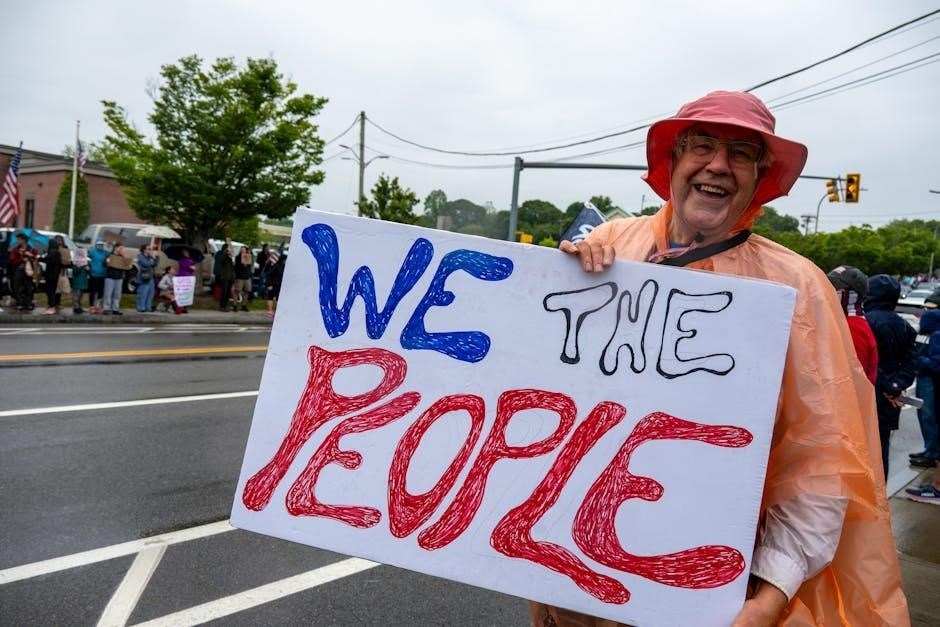
“We Are Not Free”, readily available as a PDF, delves into loss of freedom, identity, resilience, and the vital strength found within community bonds.
Loss of Freedom and Identity
The “We Are Not Free” PDF powerfully illustrates the devastating impact of Executive Order 9066 on Japanese Americans during WWII. The forced removal and incarceration stripped individuals of their fundamental freedoms – movement, livelihood, and self-determination.
Beyond physical confinement, the internment camps fostered a profound loss of identity. Families were uprooted from their homes and communities, severing ties to cultural heritage and established lives. The narrative, accessible through the PDF format, highlights how this systematic dismantling of normalcy challenged the very core of who these individuals were, forcing them to redefine themselves within the confines of a prejudiced system.
The PDF allows readers to intimately explore this struggle, emphasizing the psychological toll of such profound displacement and the enduring quest to reclaim a sense of self.
Resilience and Resistance
The “We Are Not Free” PDF doesn’t solely depict suffering; it showcases remarkable resilience and diverse forms of resistance within the internment camps. Despite facing systemic injustice, the incarcerated Japanese Americans demonstrated unwavering strength in preserving their culture, maintaining family bonds, and seeking avenues for self-expression.
The PDF format allows for a detailed examination of these acts of defiance – from continuing education and artistic pursuits to challenging camp authorities and advocating for their rights. These acts, though often subtle, represent a powerful refusal to be completely defined by their circumstances.
The story, readily available as a PDF, emphasizes that even in the face of profound loss, the human spirit endures, finding ways to resist oppression and maintain hope for a future where freedom prevails.
The Power of Community
The “We Are Not Free” PDF powerfully illustrates how community became a lifeline for Japanese Americans during incarceration. Stripped of their freedoms and possessions, individuals found solace and strength in collective support networks within the camps.
The digital accessibility of the PDF allows readers to deeply analyze how shared experiences – from communal meals and celebrations to mutual aid and advocacy – fostered a sense of belonging and resilience. These bonds were crucial for navigating the hardships and maintaining cultural identity.
The narrative, easily shared via PDF, highlights that unity wasn’t merely a coping mechanism, but a form of resistance, demonstrating the enduring power of human connection in the face of adversity.
Analyzing the PDF Version
“We Are Not Free”’s PDF format enhances accessibility for students and researchers, enabling digital preservation and wider educational use of this vital historical text.
Accessibility of the PDF
The PDF version of “We Are Not Free” presents unique accessibility considerations. While digital formats generally offer advantages for users with disabilities, the quality of the PDF significantly impacts its usability.
Factors like text recognition accuracy, the presence of alt-text for images, and proper document tagging are crucial for screen reader compatibility.
A well-structured PDF allows visually impaired readers to navigate the text effectively.
However, poorly scanned or created PDFs can present barriers, rendering the content inaccessible.
Ensuring the PDF adheres to accessibility standards, such as WCAG guidelines, is paramount for inclusive access to this important historical narrative.
Digital Preservation and Archiving
The “We Are Not Free” PDF’s existence highlights the importance of digital preservation. As a digital artifact, the PDF requires proactive archiving strategies to ensure its long-term accessibility.
File format obsolescence and data corruption pose ongoing threats. Robust archiving involves creating multiple backups, utilizing standardized file formats, and employing metadata to document the PDF’s provenance and context.
Libraries and archives play a vital role in preserving this resource for future generations, safeguarding against loss or alteration.
Digital preservation isn’t merely about storage; it’s about maintaining the PDF’s integrity and ensuring its continued usability for research and education.
Potential for Educational Use
The “We Are Not Free” PDF offers significant potential within educational settings. Its accessible format allows for easy integration into curricula focusing on World War II, Japanese American history, and civil rights.
The PDF facilitates close reading, annotation, and discussion, fostering critical thinking skills among students. Educators can utilize it to explore themes of prejudice, resilience, and the importance of safeguarding constitutional freedoms.
Furthermore, the digital format enables interactive learning experiences, such as online discussions and multimedia presentations. The PDF serves as a powerful primary source, prompting students to engage with a complex historical event and its enduring legacy.

Critical Reception and Impact
“We Are Not Free”, even in PDF form, garnered awards and positive reviews, sparking crucial conversations about racial injustice and historical memory.
Awards and Recognition
“We Are Not Free”, despite being widely accessed through its PDF format, has received significant accolades recognizing its powerful storytelling and historical importance. While specific award details directly linked to the PDF version are scarce, the book itself has been lauded by numerous organizations. It consistently appears on recommended reading lists for young adults and is frequently utilized in educational settings.
The novel’s impact extends beyond formal awards, evidenced by its inclusion in diverse curricula and its ability to generate meaningful discussions about civil rights and the Japanese American incarceration experience. The accessibility of the PDF version likely contributes to its broader reach and influence, fostering a wider understanding of this critical period in American history.
Reviews and Scholarly Analysis
“We Are Not Free” has garnered substantial critical attention, with reviews consistently praising its unique narrative structure and emotional depth. Scholarly analysis often focuses on the book’s innovative use of multiple perspectives to portray the complexities of life within the internment camps. The PDF format has facilitated academic access, enabling researchers and students to readily engage with the text.
Critics highlight the author’s skillful depiction of teenage experiences during this tumultuous period, and the novel’s exploration of themes like loss of identity and the resilience of the human spirit. Discussions frequently center on the book’s relevance to contemporary issues of racial justice and civil liberties, making it a valuable resource for both literary and historical study.
Influence on Discussions about Racial Justice
“We Are Not Free”, particularly in its accessible PDF format, has significantly impacted conversations surrounding racial justice. The novel’s depiction of systemic injustice and the violation of civil rights resonates deeply with contemporary struggles against discrimination. Its availability as a PDF fosters wider dissemination and encourages critical dialogue within educational settings and community groups.
The book prompts reflection on the historical parallels between Japanese American incarceration and other instances of racial profiling and marginalization. Scholarly discussions and book club conversations frequently explore the enduring legacy of prejudice and the importance of safeguarding constitutional rights. It serves as a powerful tool for promoting empathy and understanding.

Related Historical Events
“We Are Not Free” connects to Korematsu v. United States, the Redress Movement, and the valor of Japanese American WWII veterans,
highlighting a complex history.
Korematsu v. United States
Korematsu v. United States (1944) stands as a deeply controversial Supreme Court decision central to understanding the historical context of “We Are Not Free.” The case challenged the constitutionality of Executive Order 9066, which authorized the internment of Japanese Americans during World War II.
The Court, infamously, upheld the government’s power to detain individuals based on ancestry, arguing military necessity outweighed civil liberties. This ruling legitimized the mass incarceration depicted in the novel, demonstrating the fragility of constitutional rights during times of perceived national crisis.
Understanding Korematsu is crucial when analyzing the themes of injustice and the loss of freedom explored within “We Are Not Free,” as it represents a legal precedent for systemic discrimination.
The Redress Movement
The Japanese American Redress Movement, gaining momentum in the 1970s, directly addresses the injustices portrayed in “We Are Not Free.” Following decades of silence, activists fought for acknowledgment of the wrongful incarceration and demanded reparations from the U.S. government.
This movement sought not only financial compensation but also a formal apology and a commitment to prevent similar violations of civil rights. The 1988 Civil Liberties Act finally offered both, acknowledging the grave errors of the past.
Studying the Redress Movement alongside “We Are Not Free” highlights the enduring power of collective action and the long road towards achieving true justice and reconciliation for a community deeply scarred by historical trauma.
Japanese American Veterans of WWII
“We Are Not Free” poignantly contrasts the patriotism of Japanese American soldiers with the discrimination faced by their families at home. Despite facing immense prejudice, many volunteered for military service, forming highly decorated units like the 442nd Regimental Combat Team.
These veterans fought valiantly for a nation that simultaneously denied their basic rights, a deeply ironic and painful paradox. Their service underscored the injustice of the internment, challenging the government’s claims of national security concerns.
Exploring their stories alongside the novel emphasizes the courage and loyalty of these individuals and the hypocrisy inherent in their treatment, adding a crucial layer to understanding the complexities of this historical period.

Finding and Accessing the “We Are Not Free” PDF
Locating the “We Are Not Free” PDF requires caution; prioritize legitimate sources to respect copyright and avoid illegal downloads, ensuring ethical access.
Legitimate Sources for PDF Downloads
Accessing “We Are Not Free” in PDF format legally necessitates utilizing authorized platforms. Major online booksellers, such as Amazon and Barnes & Noble, frequently offer digital copies for purchase, guaranteeing a secure and legitimate download. Public library systems are invaluable resources; many provide e-book lending services, including PDFs, accessible with a library card.
Educational institutions often grant students access to required reading materials, including PDFs, through their digital learning platforms. Publisher websites, like the publisher of “We Are Not Free,” may also directly sell or provide sample PDFs. Always verify the source’s authenticity to avoid copyright infringement and malware risks. Prioritizing these channels supports the author and ensures a quality reading experience.
Copyright Considerations
“We Are Not Free”, like all published works, is protected by copyright law. Unauthorized reproduction, distribution, or modification of the PDF constitutes copyright infringement, carrying potential legal consequences. Downloading from unofficial or “free” websites often violates these rights, supporting illegal activities and potentially exposing users to malware.
Respecting copyright ensures authors and publishers receive fair compensation for their work, fostering continued creativity and literary production. Legitimate PDF purchases or library loans adhere to copyright regulations. Sharing purchased PDFs with individuals who haven’t acquired their own copy is also a violation. Always verify the source and understand usage rights before accessing or distributing the PDF.
Avoiding Illegal Downloads
Protecting your digital security is paramount when seeking the “We Are Not Free” PDF. Websites offering “free” downloads are frequently riddled with malware, viruses, and phishing scams, compromising your personal information. These sites often lack legitimate copyright permissions, contributing to illegal distribution.
Prioritize reputable sources like official publisher websites, authorized online retailers, and digital library platforms. Verify website security by checking for “https” in the URL and a padlock icon. Avoid clicking suspicious links or downloading files from untrusted sources. Supporting legal avenues ensures the author receives due compensation and safeguards your device from harmful software. Choose ethical access; it’s a win-win.

The Significance of the Title: “We Are Not Free”
“We Are Not Free” powerfully encapsulates the Japanese American experience, highlighting the loss of civil liberties during WWII, even within internment camps.
Exploring the Layers of Meaning
The title, “We Are Not Free,” resonates on multiple levels, extending beyond the physical confinement of the internment camps. It speaks to the erosion of fundamental rights and the psychological toll of systemic injustice. Even post-release, the lingering effects of discrimination and prejudice meant Japanese Americans weren’t truly free from societal constraints.
The phrase challenges the notion of freedom as simply the absence of physical barriers, delving into the complexities of identity, belonging, and the ongoing struggle for full civil rights. The PDF format itself, while offering accessibility, ironically represents a digital constraint – a controlled access to a story about lost control. The title’s enduring power lies in its universality, prompting reflection on contemporary issues of freedom and justice.
Freedom vs. Security
“We Are Not Free”, accessible in PDF format, starkly illustrates the historical tension between national security and individual liberties. Executive Order 9066, enacted following Pearl Harbor, prioritized perceived security over the constitutional rights of Japanese Americans. The narrative powerfully questions whether sacrificing freedom truly enhances security, or if it breeds resentment and injustice.
The PDF allows for focused study of this dilemma, prompting critical analysis of the justifications used to curtail civil liberties. The story demonstrates how fear can be weaponized to justify discriminatory practices. Ultimately, the book argues that true security isn’t achieved through oppression, but through upholding the principles of justice and equality for all, even during times of crisis.
The Ongoing Struggle for Civil Rights
The accessibility of “We Are Not Free” in PDF format amplifies its relevance to contemporary civil rights discussions. The book serves as a potent reminder that the fight for equality is not a relic of the past, but an ongoing process. The historical parallels between the Japanese American incarceration and modern-day injustices – racial profiling, immigration policies, and systemic discrimination – are striking.
Studying the PDF encourages reflection on the fragility of civil liberties and the importance of vigilance against prejudice. The story’s impact extends beyond historical awareness, inspiring advocacy for a more just and equitable society. It underscores the need to learn from past mistakes to prevent their repetition, fostering a commitment to defending the rights of all.